Grade the downside Tasuki gap before you trade the breakdown.
Upload a chart with a downside Tasuki gap sequence and get a read on the long red candle, the bearish gap down, the green pullback candle testing but not filling the gap, the prior downtrend, the volume behind the move, and a full trade plan. Bulkowski's own testing puts this pattern at continuing bearish only about 46% of the time, a weak edge that actually resolves bullish more often than not, which is exactly why running it through a grade matters more than trading the raw three-candle shape on faith.
Drag and drop your chart screenshot
or click to browse. PNG, JPG, or WebP.
Your first analysis is free. No credit card.
Make sure both the time axis (X) and price axis (Y) are visible in your screenshot for accurate results.
Grade
B+
Entry
$3.87
Stop
$3.75
Target
$4.24
Sample readout
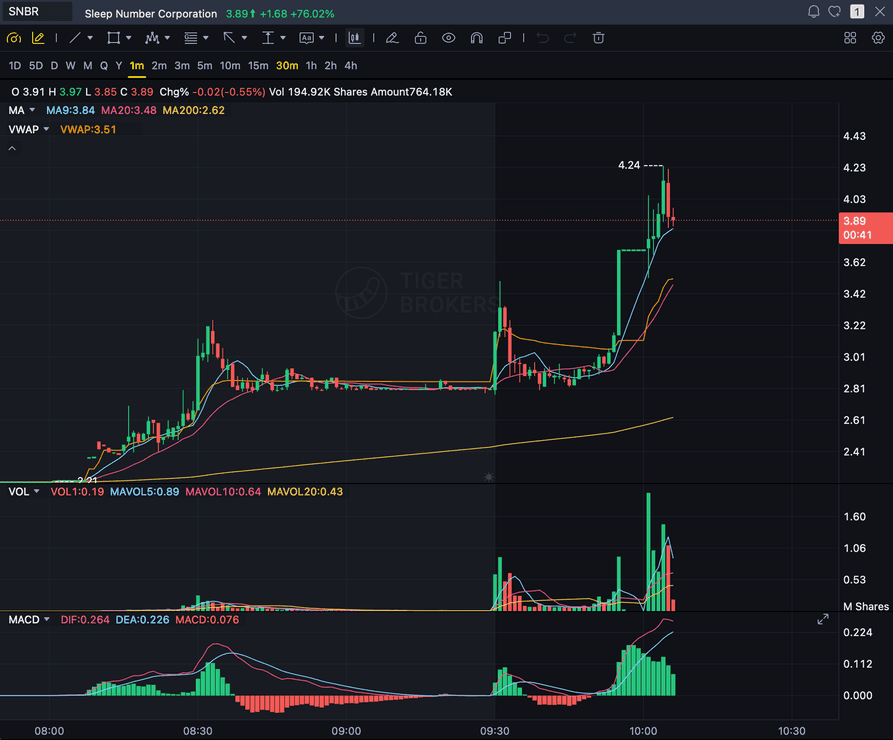
SNBR 1m bull flag pullback: strong opening momentum, lighter-volume consolidation, and a late breakout attempt with the 3.89 price marker near the current candle.
GAP DOWN
The bearish gap between candle one's low and candle two's high
HOLDS THE GAP
Whether candle three's close leaves the gap partially open
DOWNTREND
The prior trend the three-candle sequence is continuing
VOLUME
Whether the move came on real participation
Quick answer
What is a downside Tasuki gap, and can AI grade it?
A downside Tasuki gap is a three-candle bearish continuation pattern. Candle one is a long red candle. Candle two gaps down below candle one's low and is also bearish, keeping the move going. Candle three is a green candle that opens inside candle two's body and closes back up into the gap area, but its close does not fully fill the gap between candle one's low and candle two's high.
That gap staying partially open is the whole signal: buyers pushed back into the move and the gap held anyway, which reads as the downtrend likely resuming. By definition this is a with-trend continuation shape, the three-candle sequence only ever appears mid-downtrend, extending the move already in place. SnapPChart reads the three candles you mark, the size and location of the gap, whether candle three's close leaves the gap open or closes it, the downtrend leading into the pattern, and the volume, then returns a setup grade, a short entry, a structural stop, multi-target exits, and the bear case. Worth saying plainly: Bulkowski's own statistical testing found the downside Tasuki gap continuing bearish only about 46% of the time, and actually resolving as a bullish reversal in the other 54%, a small majority against the pattern's own name. That is close to a coin flip on the very outcome the setup is supposed to deliver, a weaker edge than its upside counterpart, and exactly why grading the trend context, the volume, and the structure quality matters more than trading the raw candle shape blindly. It reads the screenshot you upload and mark, it does not auto-detect or scan for the pattern, does not draw the candles or the gap for you, does not read a live price feed, and does not predict the next candle.
What the AI Returns From a Screenshot
Use the output as a repeatable pre-trade checkpoint, not a prediction.
A-F Setup Grade
See whether the setup has enough pattern clarity, momentum, volume, and reward to justify the risk.
Entry, Stop, Targets
Get a structured trade plan with entry zone, invalidation level, targets, and risk/reward.
Screenshot-Based Read
Use charts from TradingView, Webull, ThinkOrSwim, MetaTrader, Robinhood, or any broker.
Risk Notes First
The analysis flags extension, messy chop, weak retests, thin reward, and conflicting indicators.
Workflow
Use it as a quality check on the downside Tasuki gap
The downside Tasuki gap is a well-documented pattern, but Bulkowski's own numbers put its bearish-continuation rate at roughly 46%, actually resolving bullish more often than not. SnapPChart gives you a consistent read on the trend, the gap, and the volume before you trade the raw three-candle shape on faith.
- Mark candle one, the long red candle that starts the move
- Mark candle two, the bearish gap-down candle that keeps the move going
- Mark candle three, the green pullback candle that closes back toward the gap
- Confirm the gap between candle one's low and candle two's high stays partially open, not fully filled
- Confirm the sequence is extending an existing downtrend, not appearing in an uptrend or sideways chop
- Check the volume across all three candles, then re-grade after the next candle to see if the gap held
Head to head
SnapPChart vs a general AI chat assistant for downside Tasuki gap setups
A general AI tool can describe a gap on a chart, but it will not consistently judge whether a three-candle Tasuki sequence is genuinely holding the gap open, whether the prior downtrend behind it is real, or how weak this specific pattern's statistical edge actually is, to the same standard twice. SnapPChart reads the gap, the pullback candle, the prior trend, and the volume the same way on every screenshot you upload.
| Feature | SnapPChart | General AI chat assistant |
|---|---|---|
| Grades the downside Tasuki gap sequence you marked on the screenshot | Yes, every upload | Inconsistent |
| Reads whether candle three's close leaves the gap partially open | From the image | Varies by prompt |
| Checks the sequence is extending an existing downtrend | Every grade | Rarely |
| States the pattern's near-random historical edge plainly | Every grade | Rarely disclosed |
| Flags a weak setup: a thin gap, a near-full fill, fading volume | Every bear case | Rarely flagged |
| Entry, stop, targets off the with-trend continuation | Yes | Prompting required |
Learn the downside Tasuki gap setup
Use these guides to understand what makes a downside Tasuki gap grade well, so you take the read instead of the output blindly.
What do traders ask about Downside Tasuki Gap AI?
How SnapPChart grades a downside Tasuki gap from your screenshot.
How does the AI grade a downside Tasuki gap?
It reads candle one, the long red candle that starts the move, candle two, the bearish gap-down candle that keeps it going, and candle three, the green pullback candle that closes back up without fully filling the gap between candle one's low and candle two's high. It factors in the prior downtrend and the volume across all three candles, then returns a setup grade, a short entry, a structural stop, and targets. A clean three-candle sequence with the gap holding on real volume inside an established downtrend grades higher than a shallow gap, a near-filled gap, or a sequence with no clear trend behind it.
Is the downside Tasuki gap reliable?
Less than its name suggests, and it is worth saying plainly. Thomas Bulkowski's own statistical testing found the downside Tasuki gap continues bearish only about 46% of the time; the other 54% of the time it resolves as a bullish reversal instead, a small majority against the outcome the pattern is named for. That is close to a coin flip, and a weaker edge than the upside Tasuki gap's own modest number. It is exactly why SnapPChart grades the trend context, the volume, and the structure quality around the pattern instead of just confirming the three candles are there. A textbook-shaped gap sitting in a weak or absent downtrend, on thin volume, still grades poorly, because the shape alone is not a reliable edge.
How is this different from a basic gap fill or the types of gaps already covered on the blog?
The site's gap-types guide explains the four general categories, common, breakaway, runaway, and exhaustion, and whether gaps tend to fill. The downside Tasuki gap is a specific three-candle bearish continuation shape sitting on top of that background: a gap-down candle followed by a green pullback candle that tests the gap without closing it. This page grades that specific sequence, not the general question of what kind of gap it is or whether it eventually fills.
How is a downside Tasuki gap different from a falling three methods or three black crows?
All three are bearish continuation candlestick patterns, but the structure each one grades is different. Three black crows is three consecutive strong red candles with no gap and no pause. Falling three methods is five candles: one long red candle, three small candles that stay contained inside its range, then a fifth red candle that breaks below it. The downside Tasuki gap is only three candles and it is built on an actual price gap: a long red candle, a second red candle that gaps below it, then a green candle that closes back toward the gap without fully filling it. If your chart has a real, visible price gap between two of the candles, it is a downside Tasuki gap, not the other two.
Does SnapPChart auto-detect or scan for the pattern, or read live price?
No. It does not scan a feed for downside Tasuki gaps, draw the candles or the gap for you, watch the tape, or predict the next candle. You mark the three candles, screenshot the chart, and upload it, and the AI grades the structure it can see in the image: the gap, the pullback candle, the prior trend, and the volume. The grade reflects the picture you give it.
Can it tell a strong downside Tasuki gap from a weak one?
It flags the weak-structure risk in the bear case. If the gap is razor-thin, the pullback candle's close creeps right up to fully filling it, the prior downtrend is shaky or absent, or the volume is fading candle over candle, the grade drops and the trade plan calls out that the continuation thesis is weaker. A clear gap that holds with real volume behind all three candles, inside an established downtrend, grades better.
Is there a free trial for downside Tasuki gap grading?
Yes. New users get two lifetime chart analyses. The first shows the full output so you can see exactly what the downside Tasuki gap grade returns; the second is gated to show what the paid product adds. No credit card required.
Grade the downside Tasuki gap before you trade the breakdown.
Mark the three candles and the gap, screenshot the chart, and upload it from the homepage for a structured read on the continuation setup.
Grade a Downside Tasuki Gap Free